
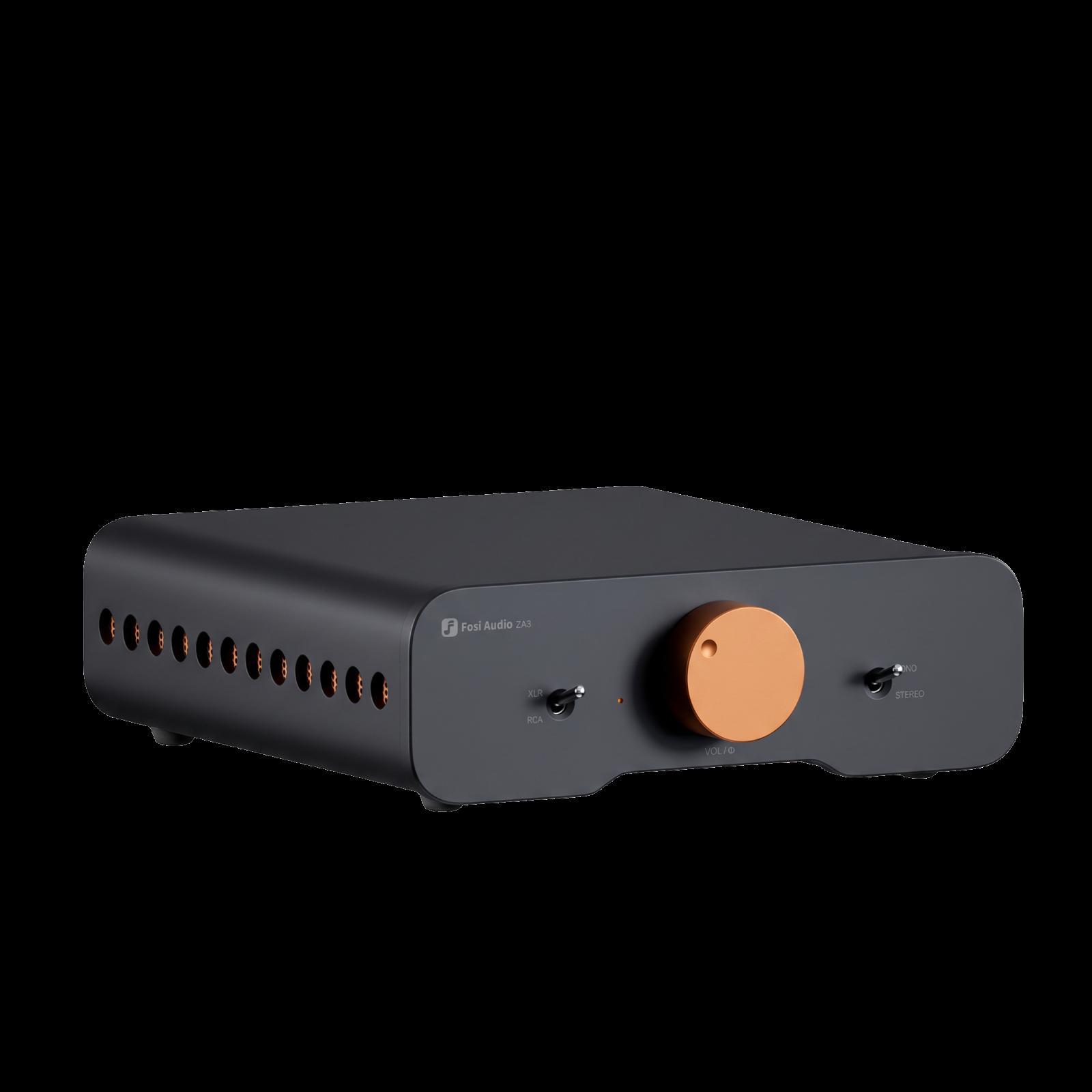
The home office has quietly become the room where many of us hear the most music. Eight hours a day, five days a week, the work playlist, the focus albums, the radio murmuring under the spreadsheets — all of it, in most homes, played through laptop speakers or a pair of headphones worn long past comfort. A stereo amplifier home audio setup scaled for a desk changes that arithmetic completely. Two small speakers at arm’s length will outplay equipment costing far more across a room, because nearfield listening plays by different and kinder rules.
Nearfield simply means listening close: the speakers sit on the desk, roughly a metre from your ears, forming a small triangle with your chair. At that distance the room barely gets a vote, the volume needed is modest, and modest equipment stops sounding modest. This guide covers the three decisions that make a desk system work — the speakers, the wiring, and the volume habits of someone who listens all day.
Why Nearfield Changes the Rules
Across a living room, sound spends most of its journey bouncing off walls, floor, and ceiling before it reaches you, and those reflections blur what the speakers produced. At a desk, the direct sound from a metre away arrives so much earlier and stronger than any reflection that the room’s opinion hardly counts. That is why studio engineers work this way: nearfield listening is the most honest sound a small room can offer, and it forgives rooms — box bedrooms, spare corners, rented flats — that defeat bigger systems.
Closeness also rewrites the power question. A metre is not far, and filling it takes very little: a small amplifier loafing along at a fraction of its output, well inside the range where it is cleanest and quietest. The desk is the one place where the sensible, compact option is also the high-performance option.
Choosing Speakers That Belong on a Desk
- Size honestly. Small bookshelf speakers with four- or five-inch woofers are the desk sweet spot; larger boxes crowd the monitors and their bass overwhelms a metre of air.
- Look for front bass ports, or sealed designs, if the speakers must sit near the wall behind the desk — rear ports need breathing room a desk rarely gives.
- Raise and angle them. Tweeters belong at ear height, so use short stands or angled foam wedges; a speaker firing into your chest sounds dull no matter its price.
- Keep the triangle small and symmetric: speakers as far apart as they are from you, equidistant from your chair, clear of the monitor’s shadow.
Set up this way, a pair of small speakers throws a stereo image that hangs between the monitors with almost holographic neatness — instruments placed left and right, a voice centred exactly where the screen is. It is the most three-dimensional sound most people own, and it comes from the smallest system in the house.
Short Cables, Simple Wiring
A desk system wires itself in minutes, and brevity is a genuine virtue here. The amplifier sits on the desk or a shelf beside it, so the speaker cables run a metre or so each — short runs, neatly equal in length, with no coils of spare wire gathering dust behind the furniture. A compact stereo amplifier home audio unit keeps the footprint honest: one box, a USB cable from the computer for the cleanest connection, and the volume knob within reach of your mouse hand. Keep the analog cables short and away from power bricks and chargers, and the system stays silent between songs, which at a metre away is a real requirement — any hiss or hum has nowhere to hide.
One input deserves planning: the work computer is the main source, but a second input for a phone or a small streamer means the desk system moonlights after hours without recabling. Switch sources at the amplifier, not by swapping plugs, and the desk stays tidy enough to actually work at.
Volume Habits for People Who Listen All Day
All-day listening is a marathon, and the desk rewards restraint. Play at a level where you can hold a conversation over the music without raising your voice, and the sound stays detailed for eight hours without the creeping fatigue that headphone listeners know too well. Loud listening compresses your hearing’s sensitivity as the day wears on, which tempts you to keep turning up — a spiral that ends in tired ears and a sore head. Break it by keeping one reference track and one familiar volume setting you return to after calls and meetings.
That is the pleasure of the thing: a stereo amplifier home audio system built for the desk is not a smaller compromise but a different speciality. Short cables, close speakers, gentle volume, and a room that cannot interfere. The office becomes the best seat in the house for music — which, given how much of the week gets spent there, is exactly as it should be.

Welcome to Merciful Prayers!
Merciful Prayers is a peaceful faith-based space made to bring hope, comfort, and spiritual strength through sincere prayers and Blessings. Our purpose is to encourage hearts, support people in difficult seasons, and help readers feel closer to God through meaningful prayers, Blessings, and uplifting words of faith.